Blog

/Blog/

Who Am I? (Part 3)

I Am Crucified with Christ

Introduction

  • Identity is the qualities, beliefs, personality traits, appearance, and/or expressions that characterize a person or group.
  • “Identities tell us who we are and they announce to others who we are” (Peter Burke).
  • Our identities guide behavior and inform how we are “supposed” to act.
  • Who Am I? I am Crucified with Christ (Galatians 2:20).

I.   Jesus Loved Me and Gave Himself for Me.

II.  I Have Been Crucified with Christ, and I No Longer Live, but Christ Lives in Me.

III. The Life I Live in the Body I Live by Faith in the Son of God.

Conclusion/Applications

  • I am Loved, Forgiven, and Called to a New Life.
  • As a Christian, who I was in Adam (the Flesh/Humanity 1.0/the old Man/my Former Identity) has been Crucified with Christ; I am Dead. I no longer Live.
  • Christ Lives in Me. I Must Constantly Subordinate Myself to the Will of Christ.  “Lord, What do You Want?”

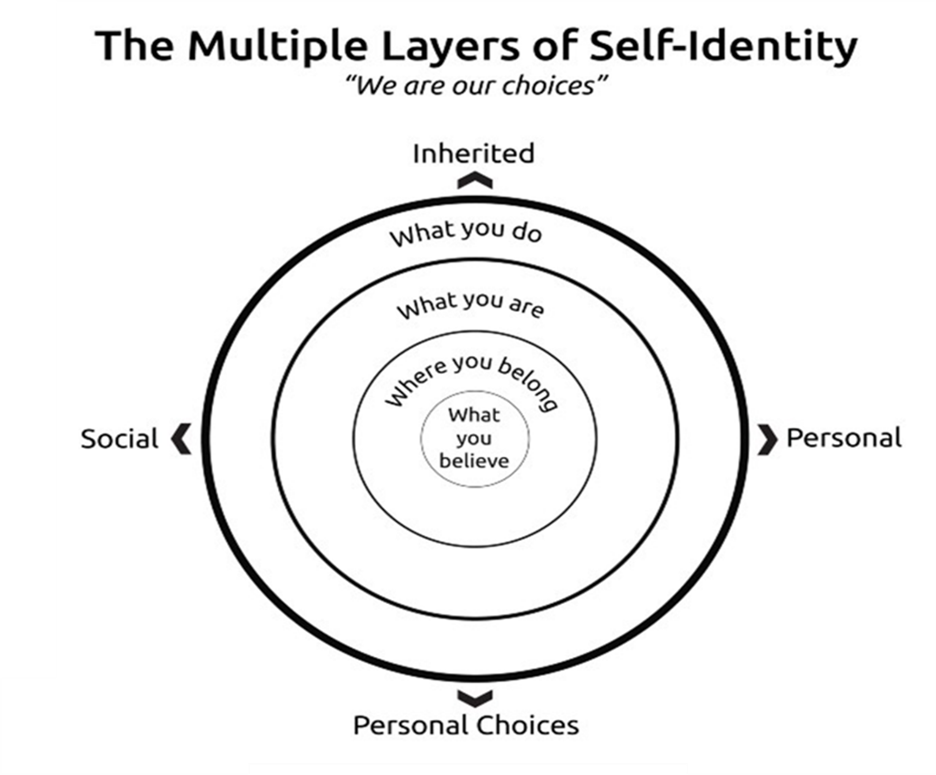
My series of messages is entitled, Who Am I? My Identity in Christ. Last week we explored Paul’s identity before and after his conversion to Christ (Philippians 3:1-15).  We concluded that identity is not fixed, but it changes throughout life.  We demonstrated how factors such as heredity, social groups, personal traits, actions, decisions, and beliefs all affect how we see ourselves and inform how we are “supposed” to act based on that identity. Paul’s identity was revolutionarily changed by his encounter with Jesus.  His devotion to Christ led him to put that relationship before every other thing – even those things he at one time had dearly cherished

This week we will approach the subject from a different angle – Paul’s understanding of what happened to him when he gave his life to Christ.

Galatians 2:20  I have been crucified with Christ and I no longer live, but Christ lives in me. The life I live in the body, I live by faith in the Son of God, who loved me and gave himself for me.

When we were baptized into Christ, we were crucified with him.  Our old sinful self (Humanity 1.0, who we were in Adam) died with Christ along with the guilt and penalty for sin.  When we rose from the water, we embraced the newness of life he gives (Humanity 2.0).  From that point on we consider ourselves dead to the practice of sin and alive to the life Jesus wants us to live. We are given a new identity in Christ!

Come join us!    Joey
By | 2022-07-30T09:16:37-06:00 July 16th, 2022|Uncategorized|0 Comments

Who Am I? (Part 2)

Paul’s Identity in Christ

 Introduction

  • Identity is the qualities, beliefs, personality traits, appearance, and/or expressions that characterize a person or group.
  • “Identities tell us who we are and they announce to others who we are” (Peter Burke).
  • Our identities guide behavior and inform how we are “supposed” to act.
  • Who Am I? My Identity in Christ. Paul’s Identity.

I.   Paul’s Identity was Not Fixed; It Changed (Philippians 3:1-3).

II.  Paul’s Identity was Multi-Layered (Philippians 3:3-6).

III. Paul’s Chose to Prioritize His Identity in Christ (Philippians 3:7-11)

IV.  Paul’s Choice was Not Easy (Philippians 3:12-15)

Conclusion

  • How we see ourselves is constantly changing due to factors such as heredity, social groups, personal traits & actions, decisions, and beliefs.
  • Paul’s identity changed when he became a Christian and he chose to prioritize that identity above all others.
  • We, like Paul, must we willing subordinate all that we are to the Lordship of Jesus Christ.

My new series of messages is entitled, Who Am I? My Identity in Christ. Last week we answered the question, “Who Am I” in terms of Psalm 8:1-4 and the song of the same name by Casting Crowns.  We concluded that we are Finite, Known, Lost, Loved, Broken, Heard, Saved, and Yours (Belonging to God).  For the purpose of abbreviation, we can summarize this as Loved, Forgiven, and Called.  This is our identity in Christ.

This Sunday we will examine Philippians 3:1-15 and explore Paul’s identity before and after Christ.  Identity is not fixed, but it changes throughout life.  We will see that factors such as heredity, social groups, personal traits & actions, decisions, and beliefs all affect how we see ourselves and inform how we are “supposed” to act based on that identity. Paul’s identity was revolutionarily changed by his encounter with Jesus.  His devotion to Christ led him to put that relationship before every other thing – even those things he at one time had dearly cherished, But whatever was to my profit I now consider loss for the sake of Christ (Philippians 3:7-8)

I will also reference the diagram below to illustrate how various factors influenced Paul’s (and our) sense of identity! Come join us!

Joey

By | 2022-07-07T12:37:34-06:00 July 7th, 2022|Uncategorized|0 Comments

Who Am I? (Part 1)

My Identity in Christ

Introduction

  • Identity is the qualities, beliefs, personality traits, appearance, and/or expressions that characterize a person or group.
  • “Identities tell us who we are and they announce to others who we are” (Peter Burke).
  • Our identities guide behavior and inform how we are “supposed” to act.
  • Who Am I? My Identity in Christ…

I.   I Am Finite – “I am a flower quickly fading, here today and gone tomorrow, a wave tossed in the ocean, a vapor in the wind.”

II.  I Am Known – “Who am I, that the Lord of all the earth would care to know my name?”

III. I Am Lost – “Who am I, that the bright and morning star, would choose to light the way for my ever-wandering heart?”

IV.  I Am Loved – “Who am I, that the eyes that see my sin would look on me with love and watch me rise again?”

V.   I Am Broken – “Who am I, that the voice that calmed the sea would call out through the rain and calm the storm in me?”

VI.  I Am Heard – “Still You hear me when I’m calling.”

VII. I Am Saved – “Lord, you catch me when I’m falling.”

VIII. I Am Yours – “You’ve told me who I am; I am Yours.”

Conclusion: “Whom shall I fear?”

  • Knowing who we are gives us purpose in life.
  • Knowing who we are gives us hope in eternity

My new series of messages is entitled, Who Am I? My Identity in Christ. “Identity is the qualities, beliefs, personality traits, appearance, and/or expressions that characterize a person or group” (Wikipedia). As humans we search for identity because we need to know who we are as we define, identify, and differentiate ourselves from others. According to Peter Burke, “Identities tell us who we are and they announce to others who we are.” Our identities guide behavior and inform how we are “supposed” to act.

In this series, I plan to discuss who we are in Christ and how that affects how we define ourselves in every other area of our life. Casting Crowns addresses this in their song, Who Am I?

Who Am I?

by Casting Crowns

Who am I, that the Lord of all the earth

Would care to know my name

Would care to feel my hurt?

Who am I, that the bright and morning star

Would choose to light the way

For my ever-wandering heart?

Who am I, that the eyes that see my sin

Would look on me with love

And watch me rise again?

Who am I, that the voice that calmed the sea

Would call out through the rain

And calm the storm in me?

Not because of who I am

But because of what You’ve done

Not because of what I’ve done

But because of who You are

I am a flower quickly fading

Here today and gone tomorrow

A wave tossed in the ocean

A vapor in the wind

Still You hear me when I’m calling

Lord, You catch me when I’m falling

You’ve told me who I am

I am Yours

I am Yours

I’m all Yours

Whom shall I fear? Whom shall I fear?

‘Cause I am Yours

I am Yours

This song beautifully depicts our identity in Christ and concludes that we belong to God.  This self-identity will inform and enrich every other aspect of our life.

Come and join us!  Joey

By | 2022-07-02T17:50:02-06:00 July 2nd, 2022|Uncategorized|0 Comments

The Encourager

The Encourager

His mom and dad named him Joseph, but that’s not how we know him.  He was a Levite from the island of Cyprus and a member of the Jerusalem church in the early chapters of Acts.  Joseph was a cousin of John Mark; the same Mark who is probably to be identified with the writer of the Gospel of Mark.  As time passed people stopped calling him “Joseph” and referred to him by his nickname, “Barnabas.”

It is as interesting thing how nicknames come to be.  A person with red hair is often called, “Red.” A tall or large man may have a description added to his name like, “Big John.”  My oldest son was called, “Little Joe” – though today he is much taller than his Dad.  My son-in-law has a prominent beard and head of hair; sometimes he is called “Bear.”  In most cases nicknames are given because they describe some prominent physical or behavioral characteristic of the one so named.

We should pay close attention when the Bible calls attention to a nickname.  Usually, there is some spiritual point to be made.  This is especially the case when God, Jesus, or an angel give someone a new name because it is indicative of a new identity or destiny in their lives.  In the case of Barnabas, his nickname was given by the apostles and Luke calls attention to this in Acts 4:36-37.

Joseph, a Levite from Cyprus, whom the apostles called Barnabas (which means Son of Encouragement),  37 sold a field he owned and brought the money and put it at the apostles’ feet.

How do you think that nickname came to be?  In my imagination, I envision a meeting of the apostles where they are trying to fill a ministry position.  Peter says, “Let’s get Joseph to do it.” John replies, “Which Joseph are you talking about?  In a church this size there are dozens of Josephs.”  “You know,” says Peter, “The Joseph who is always encouraging people.”   The nickname stuck.  Barnabas means, “Son of Encouragement” or, as we would phrase it, “The Encourager.”

Fictious story?  Sure, but only in the particulars, not the overall truth.  As we examine the story of Barnabas in Acts, he is always encouraging someone.  There is no wonder the apostles named him The Encourager or Luke singles him out as one of the major, minor characters in his narrative – he went about encouraging others!

My message Sunday will examine the occasions Luke mentions him in Acts and we will learn what he did to earn such a great nickname.

I Hope You Will Join Us!  Joey

By | 2022-06-25T11:41:40-06:00 June 25th, 2022|Uncategorized|0 Comments

Lessons On Fatherhood From The Life Of David

Introduction

  • David was a Great King, but a Lousy Father.
  • Six Lessons on Fatherhood from the Life of David.

I. Fathers Must be Willing to Set an Example for their Children

II. Fathers Must be Willing to Discipline their Children when they Sin

III. Fathers Must Forgive and Seek Restoration with their Children

IV. Fathers Must Acknowledge that their Kids Do Wrong

V. Fathers Must Restrain the Sinful Heart in their Children

  • David Did Not Restrain or Question His Sons – (1 Kings 1:6).

VI. Fathers Must Teach their Children what is Important in Life

  • David Gave a Last Charge to His Son – (1 Kings 2:2).

Conclusion

  • As Fathers we Must Examine Ourselves.
  • We Need to Learn from the Mistakes of David.
  • We Need to Lead our Children to Christ.

David was a great king, but a lousy father. He was indulgent, permissive, and set a horrible example in his own personal life.

Sunday morning, we will be examining six lessons on fatherhood from the life of David – five to avoid and one to imitate. We, fathers, need to examine our own lives and learn from his mistakes. Ultimately, we want to lead our families to Christ and teach them what it means to follow him.

I Hope You Will Join Us! Joey

By | 2022-06-18T23:05:59-06:00 June 18th, 2022|Uncategorized|0 Comments

Moses – From Zero To Hero

Moses – From Zero To Hero

God has brought about many significant changes in the lives of men and women through the centuries.

Our lesson Sunday speaks of Moses as a “Zero,” but he was not always that way. Born to a Hebrew family, he was adopted by Pharaoh’s daughter and brought up to be an Egyptian prince. In spite of his Egyptian connections, Moses longed to see his people freed from their captivity.  While visiting his people, he saw an Egyptian taskmaster mistreating a Hebrew slave. Moses killed the Egyptian and thought he had gotten away with it.  However, the next day he saw two Hebrews fighting and when he intervened, the men rejected his leadership.

13 The next day he went out and saw two Hebrews fighting. He asked the one in the wrong, “Why are you hitting your fellow Hebrew?”  14 The man said, “Who made you ruler and judge over us? Are you thinking of killing me as you killed the Egyptian?” Then Moses was afraid and thought, “What I did must have become known.” (Exodus 2:13-14).

In the New Testament, Stephen commented on this event.

23 “When Moses was forty years old, he decided to visit his fellow Israelites.  24 He saw one of them being mistreated by an Egyptian, so he went to his defense and avenged him by killing the Egyptian.  25 Moses thought that his own people would realize that God was using him to rescue them, but they did not (Acts 7:23-25).

Stephen’s account informs us that Moses had the intention, as a young man, to deliver Israel.  This, however, was not God’s plan.  Stephen attributes this, at least in part, to the stubbornness of Israel. I believe another factor was God’s timing.  As a young, Egyptian Prince, Moses might have taken the glory for himself, but as the story unfolds we see that only God could make it happen.

Because of Moses’ actions, he had to run away from Egypt. He forfeited his rights as an Egyptian. He settled in Midian, became a shepherd, and grew old.  When God finally called him, he was 80 years old, beaten down and broken by life.  Moses did not think he had much to offer anyone anymore.  He saw himself as a “Zero.”

This is where we find Moses when he encounters the burning bush and his destiny. God offers Moses a spiritual makeover, but will he cooperate?  I’ll say more in my lesson.

I Hope You Will Join Us!  Joey

By | 2022-06-11T21:45:33-06:00 June 11th, 2022|Uncategorized|0 Comments

Finding God Away From Home

Today is Graduation Sunday and we find ourselves celebrating the high school and college graduates of 2022.  Many of our graduates will be leaving home for the first time or otherwise marking a change in their lives.  Some will go on to further educational pursuits, some will begin training for a career, and others will enter directly into the work force.  Any way you look at it, graduation signals the end of one period of life and the beginning of another.

Jacob was the second of two twins born to Isaac and Rebecca.  He was prophesied to be the child who would receive God’s promise – even though he was not the first born. In spite of this, Jacob was a scrapper; he felt he had to fight for everything he got which led him to extort Esau out of his birthright and trick Isaac into giving him the blessing reserved for Esau.  His name was appropriate – “Heel Grabber,” “Usurper!”

As you can imagine, none of this set too well with his older sibling and stealing the blessing was the last straw.  Esau began plotting to kill Jacob, so he had to leave home.  Genesis 28 records the first part of his journey.

Genesis 28:10-22  Jacob left Beersheba and set out for Haran.  11 When he reached a certain place, he stopped for the night because the sun had set. Taking one of the stones there, he put it under his head and lay down to sleep.  12 He had a dream in which he saw a stairway resting on the earth, with its top reaching to heaven, and the angels of God were ascending and descending on it.  13 There above it stood the LORD, and he said: “I am the LORD, the God of your father Abraham and the God of Isaac. I will give you and your descendants the land on which you are lying.  14 Your descendants will be like the dust of the earth, and you will spread out to the west and to the east, to the north and to the south. All peoples on earth will be blessed through you and your offspring.  15 I am with you and will watch over you wherever you go, and I will bring you back to this land. I will not leave you until I have done what I have promised you.”  16 When Jacob awoke from his sleep, he thought, “Surely the LORD is in this place, and I was not aware of it.”  17 He was afraid and said, “How awesome is this place! This is none other than the house of God; this is the gate of heaven.”  18 Early the next morning Jacob took the stone he had placed under his head and set it up as a pillar and poured oil on top of it.  19 He called that place Bethel, though the city used to be called Luz.  20 Then Jacob made a vow, saying, “If God will be with me and will watch over me on this journey I am taking and will give me food to eat and clothes to wear  21 so that I return safely to my father’s house, then the LORD will be my God  22 and this stone that I have set up as a pillar will be God’s house, and of all that you give me I will give you a tenth.”

On this journey, God appeared to him to reassure him during his transition.  He promises to be with him, watch over him, bring him home safely, and fulfill all promises regarding him.  Jacob is surprised by this encounter.  Notice his words, “Surely the LORD is in this place, and I was not aware of it” (Genesis 28:16). 

A word of explanation is needed.  You and I have the whole of Scripture to understand the nature of God, but such knowledge was revealed gradually in a piece meal fashion to the early patriarchs.  Jacob believed in God, but he thought he left him back home with Mom and Dad.  He didn’t understand that God was everywhere.  That’s the reason this realization came as a surprise.

Our theology might be more advanced, but sometimes we fail to realize this emotionally.  Wherever we go, God is already there.  We may have had the bulk of our religious experience under our parent’s guidance, but once we set out on our own, God is still with us.

There are at least two applications that we can draw from this as we look at Jacob’s response.  The first is to recognize God’s presence in our lives as our guide and the source of all our blessings.  Jacob set up a pillar there as an altar of worship to God and declares that The LORD (Yahweh) would be his God.  The second is gratitude; Jacob promises to recognize his future blessings through returning a tithe back to him.

It is my prayer as you set out into the world for whatever comes next that you will “take God with you.”  Not that he is not there already, but that you will acknowledge his presence; make him YOUR God, not just the God of your parents.  Let this recognition lead you to worship (public and private), service, and dedication.  May God be with you in all you do and may you find him even though you may be far from home!

Joey

By | 2022-06-05T02:25:20-06:00 June 5th, 2022|Uncategorized|0 Comments

Outreach 2022 (Part 8)

The Romans’ Road

Romans 1, 3, 5, 6, 10

Introduction

  • Outreach 2022: How the Boise Church Can Reach Out in 2022
    • Making Disciples (Going, Baptizing, Teaching)
    • Restoring the Erring
    • Seeking the Lost (Attractional, Missional, Relational)
    • Nudge Evangelism
    • Neighboring is loving your neighbor as yourself.
    • Witnessing is an authoritative approach to outreach.
    • Apollos Evangelism (Act 18:24-19:7) is Explaining “the way of God more adequately.”
  • A Gospel Presentation (The Romans’ Road).

I.    God is the Creator and Ruler over All (Romans 1:20-21).

II.   No One is Righteous (Romans 3:10).

III.  We All have Sinned and Fallen Short of God’s Glory (Romans 3:23).

IV.   The Penalty for Sin is Death, but God Gives Life (Romans 6:23).

V.     God Loves us and Gave Jesus to Die for Us (Romans 5:8).

VI.    We Must Confess Jesus as Lord and Place our Faith/Trust in Him for Forgiveness (Romans 10:9-10, 13).

VII.   In Baptism, We Die to Sin, are Buried with Christ and Rise with Him to Live a New Life (Romans 6:3-8, 17-18).

VIII. Once Saved We Offer Our Bodies to God for His Service (Romans 12:1-2).

Conclusion

  • The Romans’ Road is an Excellent Presentation of the Gospel.
  • Have You Responded in Faith for Salvation?

Sunday’s lesson marks the last in our series, Outreach 2022. We have had a long break between the last lesson and this one.  With Friend’s Day, my vacation, and COVID quarantine we are just now reaching the last lesson.  I am skipping the lesson that was scheduled for last week, Apollos Evangelism, but the full outline can be found in last week’s blog article if you are keeping your fill-in-the-blank outlines.  We may revisit it on another occasion.

I wanted to end this series with a simple gospel presentation.  I’m using the Romans’ Road as a guide.  My purpose in this series was to empower us to reach out to others in the ways we are most gifted: pre-outreach, outreach, or post-outreach (“going, baptizing, teaching.”).  We’ve discussed ways we can seek the lost, engage others, and share our faith.  In this final lesson I will be sharing scriptures you can use to lead someone to Christ.   I’ll say more on Sunday.

I hope you will join us!  Joey

By | 2022-05-28T23:55:52-06:00 May 28th, 2022|Uncategorized|0 Comments

Outreach 2022 (Part 7)

Apollos Evangelism

Acts 18:24-19:7

Introduction

  • Outreach 2022: How the Boise Church Can Reach Out in 2022
    1. Making Disciples (Going, Baptizing, Teaching)
    2. Restoring the Erring
    3. Seeking the Lost (Attractional, Missional, Relational)
    4. Nudge Evangelism
    5. Neighboring is loving your neighbor as yourself.
    6. Witnessing is an authoritative approach to outreach.
  • Apollos Evangelism (Act 18:24-19:7) is Explaining “the way of God more adequately.”

I.  Why is Apollos Evangelism Necessary?

  • All of Us are Wrong about Something.
  • Christian Doctrine is Important. Example: Baptism.
  • Doctrinal Error, at Best, will Lead to a Loss of Blessings and, at Worst, a Loss of our Souls.
  • Incorrect Theology Will Lead Others Astray as Well.

II.  How Should We Practice Apollos Evangelism?

Conclusion

  • Historical Perspective: Our Primary Form of Evangelism.
  • Take Care with the Issue and your Attitude.

Jesus commanded his followers to “make disciples.” One way we have sought to fulfill this imperative is by explaining to our religious neighbors, “the way of God more adequately” (Acts 18:24-19:7).  I call this Apollos Evangelism because this was the strategy used by Aquilla and Priscilla with Apollos in Acts 18-19).

I say, “one way,” but in many cases it was the only or primary way we have reached out. Our use of this method reflects a time when our culture was predominantly Christian and almost everyone claimed to be a believer or went to church somewhere.  We saw our task as converting these individuals from their error to the truth of God’s word.  This was and is a worthy goal; Aquilla and Priscilla saw the need and it still exists today.

However, we made many mistakes along the way.  We were sometimes arrogant.  Often we were more successful in converting our religious neighbors to a type of “Church-of-Christ-ism,” instead of to Christ.  Further, we often neglected those who were non-believers and repelled those who were fed up with the tribalism and sectarianism of Christianity. How can we properly practice Apollos Evangelism?

I hope you will join us this Sunday!  Joey

By | 2022-05-21T22:08:58-06:00 May 21st, 2022|Uncategorized|0 Comments

Characteristics Of A Godly Mother

The first Mother’s Day was celebrated in West Virginia in 1912. Mothers were to be recognized as an important part of our culture and lives. The heart of a mother is like a rare jewel. They love  their children during the worst and best of times.

A familiar Mother’s Day poem written in the early 1900’s is:

M is for the Many things she gave me,

O means only that she is growing Old.

T is for the Tears she shed to save me,

H is for her Heart of purest gold.

E is for her Eyes with love light shining,

R means Right and Right she will always be.

Put them all together, they spell MOTHER.
A word that means the world to me.

A mother’s love, guidance, and faith are all incredibly impactful on her children. As Abraham Lincoln shared, “I remember my mother’s prayers and they have always followed me. They have clung to me all my life” The encouragement of a mother is irreplaceable, and they deserve to be just as uplifted in return!

Moms have to wear a lot of hats during the week. They exhibit many different traits on a regular basis, like being patient, organized, optimistic, and flexible. So much of raising a family involves positive thinking while going with the flow, since the days can be completely unpredictable.  While this can make life interesting, to say the least, it also means that many moms could use regular encouragement and support.

I pray our mothers, grandmothers and great grandmothers deeply feel the love of God on their special day and also the love and encouragement of family and friends.

This scripture seems to be written just for mothers.

“Therefore if you have any encouragement from being united with Christ, if any comfort from his love, if any common sharing in the Spirit, if any tenderness and compassion, then make my joy complete by being likeminded, having the same love, being one in spirit and of one mind. Do nothing out of selfish ambition or vain conceit. Rather, in humility value others above yourselves, not looking to your own interests but each of you to the interests of the others.” (Philippians 2:1-4 NIV)

Michael Kamplain

By | 2022-05-07T20:48:02-06:00 May 7th, 2022|Uncategorized|0 Comments